Zone 2 Heart Rate: What It Is, and Why Your Watch Disagrees
Everyone tells you to train in Zone 2. Almost nobody mentions that your watch, your friend’s watch and the podcast you heard it on are using three different definitions — and that the simplest test needs no watch at all.

Zone 2 went from a coaching term to a wellness buzzword in about three years, and somewhere in the process it stopped meaning one thing. You have probably been told to spend most of your training there. You have probably also noticed that your watch, your friend’s watch and whatever you heard it on cannot agree what "there" is.
They are not malfunctioning. They are using different definitions, and nobody tells you which one you are looking at.
The short answer
In the five-zone model used by most watches and coaching software, Zone 2 is roughly 60–70% of your maximum heart rate. It is the pace you could hold for an hour or more — comfortable, slightly boring, and noticeably slower than most people run when left to themselves.
| Zone | % of max HR | What it feels like |
|---|---|---|
| 1 | 50–60% | Warm-up. Easy walking. |
| 2 | 60–70% | Conversational. Full sentences, no gasping. |
| 3 | 70–80% | Working. Short sentences only. |
| 4 | 80–90% | Hard. A few words at a time. |
| 5 | 90–100% | Maximal. No talking. |
The common five-zone model anchored on percentage of maximum heart rate. Boundaries shift by around five points if your device anchors on heart rate reserve or lactate threshold instead.
How to calculate your Zone 2
1. Estimate your maximum heart rate
The famous formula is 220 minus your age. It is easy to remember and not very good — individual maximum heart rates scatter widely around it, so two 40-year-olds with the same estimate can have real maximums a long way apart.
The Tanaka formula — 208 − (0.7 × age) — fits population data better and is the one worth using if you are picking from memory. The two agree at about age 40 and then diverge in both directions: at 25 the old formula gives 195 against Tanaka’s 190, and at 60 it gives 160 against Tanaka’s 166. So the familiar version flatters the young and short-changes the old — by six beats a decade either side of the crossover.
2. Take 60–70% of it
| Age | Estimated max HR (Tanaka) | Zone 2 range |
|---|---|---|
| 25 | 191 | 115–134 bpm |
| 35 | 184 | 110–129 bpm |
| 45 | 177 | 106–124 bpm |
| 55 | 170 | 102–119 bpm |
| 65 | 163 | 98–114 bpm |
Estimates only, from 208 − (0.7 × age), rounded. Your real maximum can differ from the estimate by a wide margin in either direction, which is why the talk test below is more reliable than this table.
3. Or skip the arithmetic entirely
The talk test. If you can hold a conversation in complete sentences, but would slightly rather not, you are in Zone 2. If you are comfortably chatting away, you are probably in Zone 1. If you are answering in three-word bursts, you have drifted into Zone 3 — which is where most people spend their easy runs without realising.
It sounds unscientific next to a number on a screen. It is more reliable than the number on the screen, because it responds to your actual physiology on the day rather than to an age-based estimate made once when you set the watch up.
Why your watch and your friend’s watch disagree
This is the part almost nobody explains, and it accounts for most of the confusion.
- Different anchors. Polar defaults to a percentage of maximum heart rate. Garmin defaults to a percentage of heart rate reserve — the gap between your resting and maximum rates — when you have given it a resting figure. The same effort can land in different zones on the two watches purely from that choice.
- Different maximum estimates. If one device used 220 − age and the other used Tanaka, every zone boundary shifts underneath you.
- Different zone counts. Five-zone models are common but not universal, and a three-zone model’s "Zone 2" is a completely different band.
- Optical sensor lag. Wrist heart rate takes time to catch up at the start of an effort and can latch onto your cadence instead of your pulse. At the low intensities Zone 2 lives at, that error is proportionally larger.
Pick one system, anchor it to your own maximum rather than a formula, and stay with it. Consistency is worth more than precision here — as it is with step counts and calorie estimates.
Why Zone 2 is worth the time
Easy aerobic work builds the base that everything else sits on: your body gets better at using oxygen and at burning fat for fuel, and it does so at an intensity you can repeat several times a week without needing to recover from it.
The practical argument is simpler than the physiology. Most people train too hard on their easy days and not hard enough on their hard days, ending up in a middle ground that is tiring without being productive. Slowing your easy sessions down is what makes the hard ones possible.
It also shows up in the numbers you already watch. Consistent aerobic training is one of the better-supported ways to raise your VO2 max, and it tends to move your resting heart rate and HRV in the direction you want over weeks and months.
Common mistakes
- Running your Zone 2 in Zone 3. The single most common one. If it feels like a proper run, it probably is one.
- Trusting an estimated maximum. Every zone you see is built on top of it. If the estimate is 10 bpm out, so is every boundary.
- Chasing the number rather than the effort. Heat, illness, caffeine, poor sleep and stress all move your heart rate at a given pace. On those days the talk test is right and the watch is wrong.
- Comparing zones with other people. Different anchor, different estimate, different device. The comparison means nothing.
- Expecting a quick change. Aerobic adaptation runs on weeks and months, not sessions. Judge it on a monthly view.
How we handle it
Every wrist device reads heart rate the same way — an optical sensor and a lot of signal processing — and no wrist sensor sees through skin better than another. That part is table stakes. What is not table stakes is whether your heart rate gets sold, mined by ad and analytics trackers, paywalled behind a membership, or dressed up as a lab measurement.
What we try not to do is dress an estimate up as a measurement. A zone built on an age-based guess at your maximum heart rate is a guess with a boundary drawn on it, and telling you that plainly is more useful than a confident number that happens to be wrong.
Your readings are never sold, stored under a random ID rather than your name, and erasable in a single tap. That is the same position we take on sleep scores, HRV and VO2 max: the number is an estimate, the trend is the useful part, and the data stays yours.
Heart-rate data is the most continuous record a watch keeps. Which brands upload it and which do not.
So: roughly 60–70% of your maximum, slower than you think, and easiest confirmed by whether you can still finish a sentence. If your watch disagrees with your lungs, believe your lungs.
Frequently asked questions
- What heart rate is Zone 2?
- In the standard five-zone model, Zone 2 is about 60–70% of your maximum heart rate. For a 45-year-old with an estimated maximum of 177 bpm, that is roughly 106–124 bpm. Your real maximum can differ substantially from any age-based estimate, so treat the range as a starting point and confirm it with the talk test.
- How do I calculate my Zone 2 heart rate?
- Estimate your maximum heart rate — 208 − (0.7 × age) fits population data better than the older 220 − age — then take 60–70% of it. Better still, skip the arithmetic: if you can speak in full sentences but would rather not, you are in Zone 2. That test responds to how you actually feel today, which no formula does.
- Why does my watch show a different Zone 2 than my friend’s?
- Because they anchor zones differently. Polar defaults to a percentage of maximum heart rate, while Garmin defaults to a percentage of heart rate reserve when it knows your resting rate. Add different maximum-heart-rate estimates and different zone counts, and the same effort can appear in different zones on two devices. Neither is broken.
- Is Zone 2 the same as the lactate Zone 2 people talk about?
- Not necessarily. The physiological definition is the intensity at which blood lactate sits at roughly 1.5–2.0 mmol/L, measured in a lab, and in trained people that often falls higher than 60–70% of maximum heart rate. A coach quoting the lactate definition and a watch showing the five-zone one are describing different efforts under the same name.
- How much Zone 2 training should I do?
- Most endurance coaching puts the majority of weekly training at easy intensity, with a smaller portion genuinely hard. The common error is the middle ground — easy days run too hard and hard days not hard enough. How much depends on your goals and how much you train, which is a question for a coach rather than a watch.
- Does Zone 2 training burn more fat?
- A greater proportion of the energy used at low intensity comes from fat, which is where the claim comes from. Total energy expenditure still depends mostly on how long and how hard you go, so Zone 2 is better understood as a sustainable way to accumulate aerobic training than as a shortcut to fat loss.
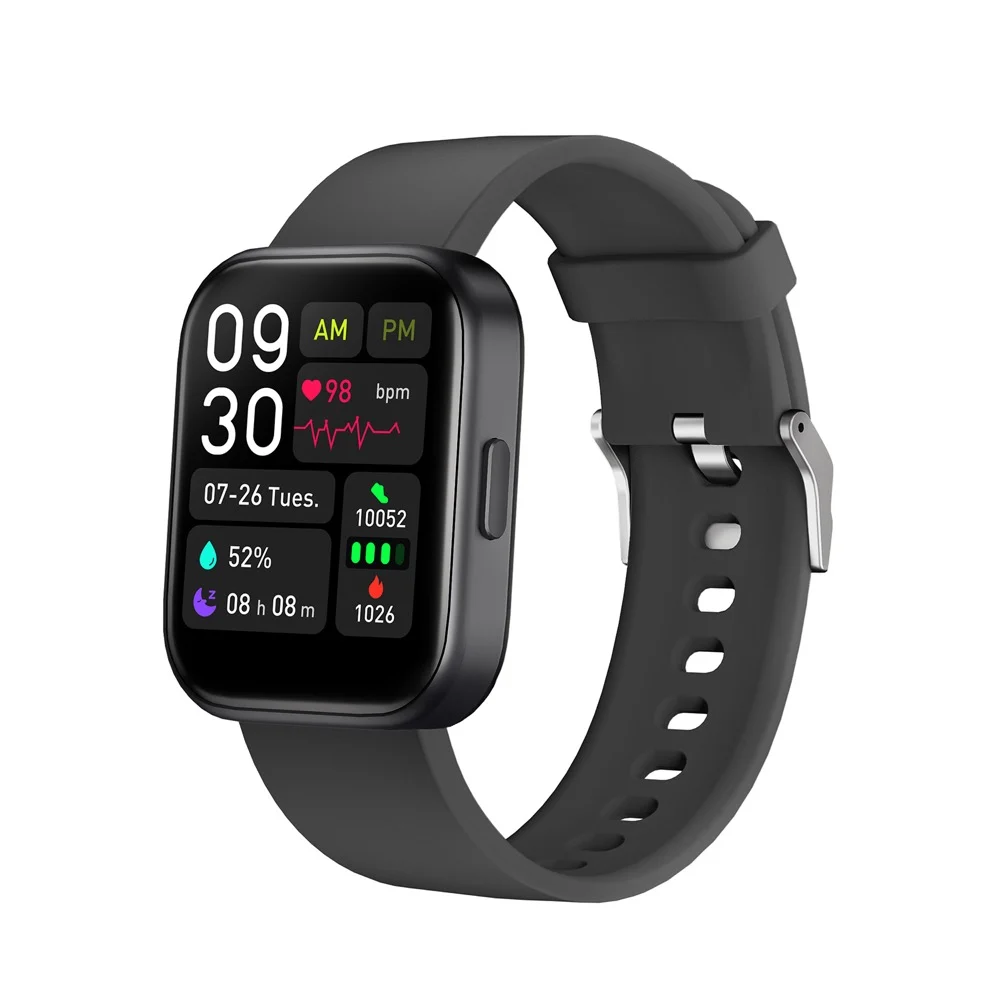
A heart rate you can actually read
The Tribe Watch shows your heart rate and the shape of your effort, without pretending an estimated zone is a lab measurement. $119.99 once, no subscription, and never sold.
- Never sold, and no ad or analytics trackers in the app
- Locked to your account, saved under a random ID
- Erase everything with one tap, whenever you want
- No subscription for any tracking feature
Private by design. Yours by default.