How Accurate Are the Calories on Your Fitness Tracker?
Your watch shows heart rate and calories burned on the same screen, with the same confidence. One of them is measured to within a few percent. The other is a guess that research has found wrong by 27% to 93%.

Your watch tells you two things on the same screen, in the same font, with the same air of certainty: your heart rate, and how many calories you burned. One of those is measured to within a few percent. The other is an estimate that can be wrong by more than half.
Knowing which is which changes how you should use the device — particularly if you have ever eaten something because your watch said you had earned it.
The short answer
Fitness trackers consistently overestimate calories burned, commonly by a wide margin. The most-cited work on this is a 2017 Stanford study that tested seven popular wrist-worn devices across 60 participants. It found that the best device had a median error of 27% for energy expenditure, and the worst was out by 93%.
The same study found heart rate measurement was good — most devices landed within roughly 5% of a clinical reference. That gap between the two figures is the whole story, and it is not a flaw anyone is hiding. It follows from what a wrist sensor can and cannot see.
The study is from 2017 and hardware has moved on since, but later work has broadly reached the same shape of conclusion: heart rate good, calories poor, error skewed toward overestimation.
Why heart rate is accurate and calories are not
Heart rate is a measurement. The optical sensor on the back of your watch shines light into your skin and detects the pulse of blood underneath. There is a physical signal, and the device reads it.
Calories burned is an inference stacked on that measurement. To turn a pulse into an energy figure, the device has to assume:
- 1That your heart rate reflects your energy use. It usually correlates — but caffeine, heat, stress, dehydration, illness and some medications all raise your heart rate without burning a single extra calorie.
- 2That you are metabolically typical. The formulas run on your age, sex, height and weight. Two people with identical stats can differ substantially in actual energy expenditure.
- 3That it knows what you are doing. Energy cost per minute differs enormously between walking, cycling and lifting, and the watch is inferring the activity largely from wrist motion.
Which activities are worst
Accuracy varies a great deal by what you are doing, because wrist motion is a better proxy for some activities than others.
| Activity | Roughly how it fares | Why |
|---|---|---|
| Walking | Best of a poor set — average errors around 30% | Steady, rhythmic, and the motion at the wrist matches the effort. |
| Running | Similar to walking, around 30% | Same reason. Pace and heart rate track each other reasonably well. |
| Cycling | Considerably worse — errors around 50% | Your wrists barely move while your legs do the work. |
| Strength training | Poor | Short, intense efforts with long rests. Heart rate lags the actual work badly. |
| Yoga and stretching | Poor | Low heart rate, low motion, and real but unmeasured muscular effort. |
| Carrying or pushing loads | Poor | Substantial energy cost with little wrist movement to detect. |
Figures are drawn from published comparisons against laboratory reference measurement; individual devices vary.
What the number is still good for
None of this makes the figure worthless. It makes it a relative measure rather than an absolute one — and relative measures are genuinely useful.
- Comparing your own days. If Tuesday reads 2,400 and Wednesday reads 1,900, you very likely did move less on Wednesday. The error is reasonably consistent for the same person doing the same activity, so the difference carries information even when the absolute number does not.
- Spotting a trend. A month that averages meaningfully below the previous month is a real signal about your activity.
- Motivation. A number that goes up when you move is a decent nudge, provided you do not treat it as currency.
Read it the way you would read a car’s fuel-economy display: useful for comparing this week with last, useless for calculating exactly how far you can go.
The one habit worth changing
If you are eating according to what your watch says you burned, you are building on the least reliable number the device produces — and the error runs in the direction that works against you.
A watch reporting 600 calories for a workout that actually cost 350 has handed you 250 calories that do not exist. Do that several times a week and the gap becomes the whole reason a deficit is not showing up on the scale.
The practical version: do not eat back your exercise calories on the basis of a wrist estimate. If you are tracking intake seriously, set your target from your body and your goal, treat the watch’s figure as directional, and judge progress over weeks rather than days.
How we handle it
We show calories because people want the number, and hiding it would be its own kind of dishonesty. But we would rather say plainly what it is: an estimate built on an inference, best used to compare your own days with each other.
That is the same position we take on sleep scores, HRV and VO2 max — every one of them is a model, not a measurement, and the useful thing is the trend rather than the digit. Your readings are never sold, stored under a random ID rather than your name, and erasable in one tap.
Accuracy is roughly the same everywhere. What differs is what happens to the numbers afterwards — the structural comparison is here.
So — how accurate are the calories on your fitness tracker? Accurate enough to tell you that today was busier than yesterday. Nowhere near accurate enough to tell you what to have for dinner.
Frequently asked questions
- How accurate are fitness tracker calories?
- Not very. A 2017 Stanford study of seven wrist-worn devices found median energy-expenditure errors ranging from 27% for the best device to 93% for the worst, while heart rate measurement on the same devices was typically within about 5%. Errors are nearly always overestimates.
- Do fitness trackers overestimate calories burned?
- Yes, consistently. The error runs in the same direction across devices and activities. That matters most if you eat according to the number, because it hands you calories you did not actually burn.
- Why are calories less accurate than heart rate on a watch?
- Heart rate is measured directly by an optical sensor reading blood flow. Calories are inferred from that reading using assumptions: that your heart rate reflects your energy use, that you are metabolically typical for your age, sex, height and weight, and that the watch has correctly identified the activity from wrist motion. Each assumption adds error.
- Which activities are least accurate for calorie tracking?
- Cycling, strength training, yoga and load carrying. All involve real effort that a wrist sensor cannot see well — your wrists barely move while cycling, and heart rate lags badly behind short, intense strength efforts. Walking and running are the most accurate, and even those average around 30% error.
- Should I eat back the calories my watch says I burned?
- No — not on the basis of a wrist estimate. Because devices overestimate, eating back exercise calories can quietly erase a deficit. Set your intake target from your body and your goal, treat the watch figure as directional only, and judge progress over weeks. If you are managing weight for a health reason, speak to a doctor or dietitian.
- What is a fitness tracker calorie count actually useful for?
- Comparing your own days and spotting trends. The error tends to be reasonably consistent for the same person doing the same activity, so the difference between Tuesday and Wednesday carries real information even though neither absolute figure does.
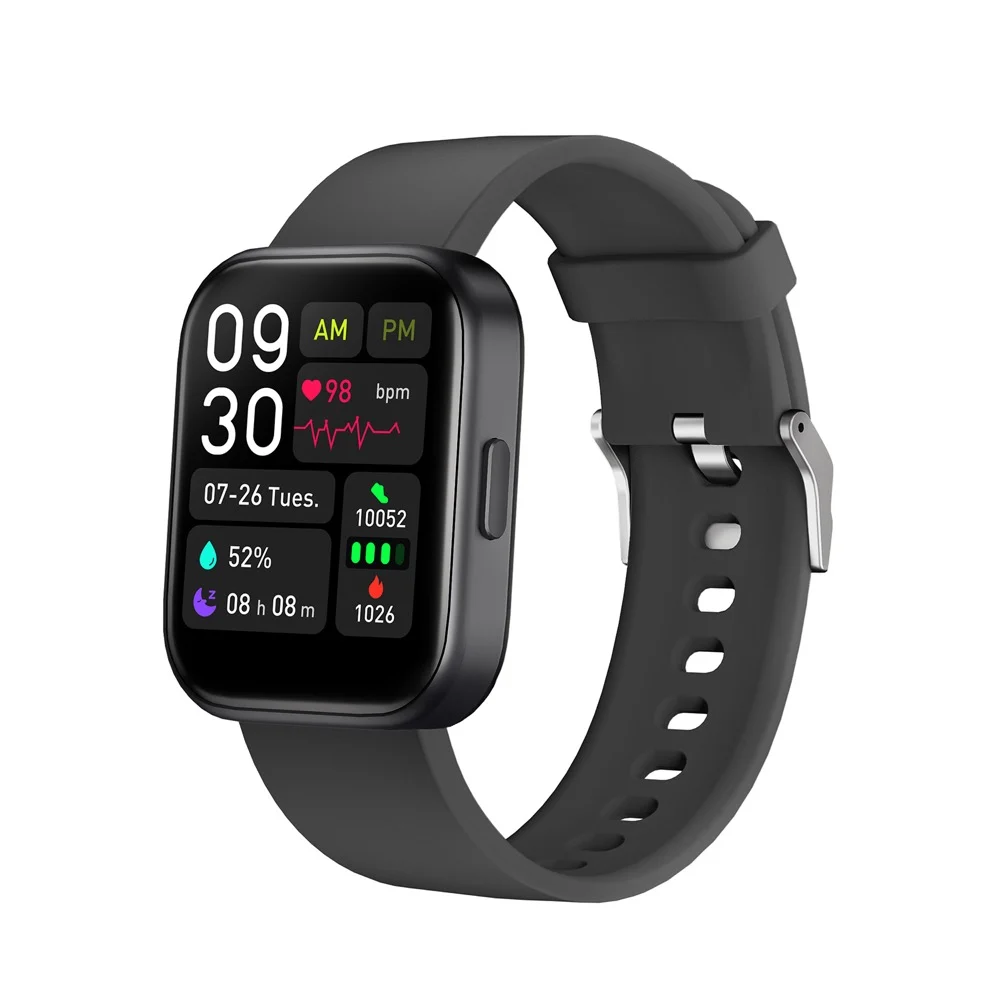
A tracker that doesn’t pretend to know things
The Tribe Watch shows you heart rate, sleep and daily activity — never sold, with no ad or analytics trackers in the app — and describes what it can actually see rather than dressing an estimate up as a measurement. $119.99 once, with no subscription on any tracking feature.
- Never sold, and no ad or analytics trackers in the app
- Locked to your account, saved under a random ID
- Erase everything with one tap, whenever you want
- No subscription for any tracking feature
Private by design. Yours by default.