How Many Active Calories Should You Burn a Day?
Every answer you’ll find gives a number like 300–500. No health authority has ever published an active-calorie target — the guideline is written in minutes, and your watch converted it into a currency it can’t measure accurately.

Search this question and every answer gives you a number — usually 300 to 500 active calories a day, sometimes 500 to 700 if you want to lose weight. The numbers are quoted confidently and sourced to nobody.
Here is where they actually come from, why the honest answer is a different unit entirely, and what to do with the ring on your watch.
The short answer
There is no official active-calorie target, because no health body has ever set one. The World Health Organization and national health services publish physical activity guidelines in time: roughly 150–300 minutes of moderate activity a week for adults, or 75–150 minutes of vigorous activity, plus muscle-strengthening twice a week.
Nowhere in those guidelines is a calorie figure. The 300–500 you keep reading is what you get when someone converts "about 30 minutes a day of moderate activity" into calories for a hypothetical average adult — and then everyone else repeats the output without the assumption attached.
Active calories vs total calories
Worth settling this first, because the two numbers on your watch measure different things:
| What it counts | Roughly | |
|---|---|---|
| Resting calories | What your body burns keeping you alive — breathing, circulation, brain, temperature. Also called BMR or resting energy expenditure. | Commonly 1,300–2,000 kcal/day for adults, depending on size, sex and composition. |
| Active calories | Everything burned above resting: walking to the car, climbing stairs, workouts, fidgeting. | Highly variable — a few hundred for a sedentary day, over a thousand for a very active one. |
| Total calories | The two added together. This is the number that matters for energy balance. | Resting + active. |
Apple’s Move ring counts active calories. Most other devices show both, sometimes labelling total as "calories" without qualification — which is one reason two watches on the same wrist can appear to disagree wildly.
Why a calorie target is a weak target
Two problems, and the second is the one nobody mentions.
1. It depends enormously on your body weight
Energy cost scales with the mass you are moving. Here is roughly what 30 minutes of brisk walking earns, by body weight:
| Body weight | Active calories, 30 min brisk walk | Minutes to reach 300 |
|---|---|---|
| 60 kg / 132 lb | ~125 kcal | ~70 minutes |
| 70 kg / 154 lb | ~145 kcal | ~60 minutes |
| 80 kg / 176 lb | ~170 kcal | ~55 minutes |
| 90 kg / 198 lb | ~190 kcal | ~48 minutes |
| 100 kg / 220 lb | ~210 kcal | ~43 minutes |
Approximate, calculated from standard metabolic-equivalent values for brisk walking. Real figures vary with pace, terrain, fitness and individual metabolism.
Read the last column. Two people doing exactly the same daily walk hit a "300 active calorie" target at completely different times — and the lighter, often fitter person has to work longer to reach a number that is supposed to represent the same health benefit. A shared calorie target quietly penalises smaller bodies.
2. Your watch cannot measure it accurately
This is the larger problem. A calorie target expressed in your watch’s calories is a target in a currency that does not hold its value. Research comparing wrist devices against laboratory measurement has found energy-expenditure errors from 27% at best to 93% at worst, nearly always overestimating.
What to track instead
Minutes. They are the unit the guidelines are actually written in, and — crucially — they are the unit your watch measures most reliably. Detecting that you are moving briskly is a far easier problem than estimating how much energy that movement cost.
- 1Aim for 150–300 minutes of moderate activity a week, which works out at roughly 20–45 minutes a day. Brisk enough that talking is easy but singing is not.
- 2Or 75–150 minutes of vigorous activity, which counts roughly double.
- 3Add muscle-strengthening on two days. No calorie counter captures this well, and it matters independently.
- 4Use the calorie figure to compare your own days, not to hit a threshold. The error is fairly consistent for the same person doing the same thing, so Tuesday versus Wednesday still carries information.
Minutes are measured. Calories are modelled. When the two disagree, trust the one the device can actually see.
If you still want a number
Plenty of people find a daily target genuinely motivating, and there is nothing wrong with that. Two ways to set one that will not mislead you:
- Derive it from your own baseline. Wear the watch normally for two weeks, take your average active calories, and set a target modestly above it. That target is in your device’s units, calibrated to your body — which is the only way a calorie goal is meaningful.
- Use the minutes and let the calories follow. Hit 30 active minutes a day and your active-calorie figure will land wherever it lands for someone your size. That number is the output, not the goal.
How we handle it
We show active calories because people want to see them, and hiding a number everyone else displays would be its own kind of dishonesty. But we would rather be clear about what it is: an estimate, derived from another estimate, useful for comparing your own days.
It is the same position we take on sleep scores, HRV and VO2 max — each is a model rather than a measurement, and the trend is worth more than the digit. Your readings are never sold, stored under a random ID rather than your name, and erasable in one tap.
If you are still choosing a device, the questions that actually separate them are structural rather than sensor-related — we set out the five that matter.
So — how many active calories should you burn a day? Nobody official has ever said. Aim for 20 to 45 minutes of brisk movement, let the calorie number report whatever it reports, and spend the attention you were going to give that ring on the walk itself.
Frequently asked questions
- How many active calories should I burn a day?
- There is no official target. Health guidelines are written in minutes — roughly 150–300 minutes of moderate activity a week, about 20–45 minutes a day — not calories. The 300–500 figure widely quoted online is a conversion of those minutes into calories for an average-sized adult, not a published recommendation.
- What is the difference between active calories and total calories?
- Resting calories are what your body burns simply staying alive, commonly 1,300–2,000 a day for adults. Active calories are everything burned above that through movement. Total calories is the two added together. Apple’s Move ring shows active calories; some devices show total and label it simply "calories", which is why two watches can appear to disagree.
- Is 500 active calories a day good?
- It depends almost entirely on your body weight and on how accurate your device is. A 100 kg person reaches 300 active calories in roughly 43 minutes of brisk walking; a 60 kg person needs about 70 minutes for the same figure. A shared calorie target quietly asks more of smaller bodies for the same health benefit.
- Are active calories on a watch accurate?
- Not very. Research comparing wrist devices against laboratory measurement has found energy-expenditure errors ranging from 27% for the best device to 93% for the worst, and the error nearly always overestimates. Use the figure to compare your own days rather than as an absolute number.
- Should I set an active calorie goal?
- If you find one motivating, derive it from your own baseline: wear the watch normally for two weeks, take your average, and set a target modestly above it. That way the goal is calibrated to your body and your device. Setting it from a number you read online is calibrated to neither.
- What should I track instead of active calories?
- Minutes of moderate-to-vigorous activity. It is the unit health guidelines actually use, and it is the unit wearables measure most reliably — detecting that you are moving briskly is a far easier problem than estimating the energy that movement cost.
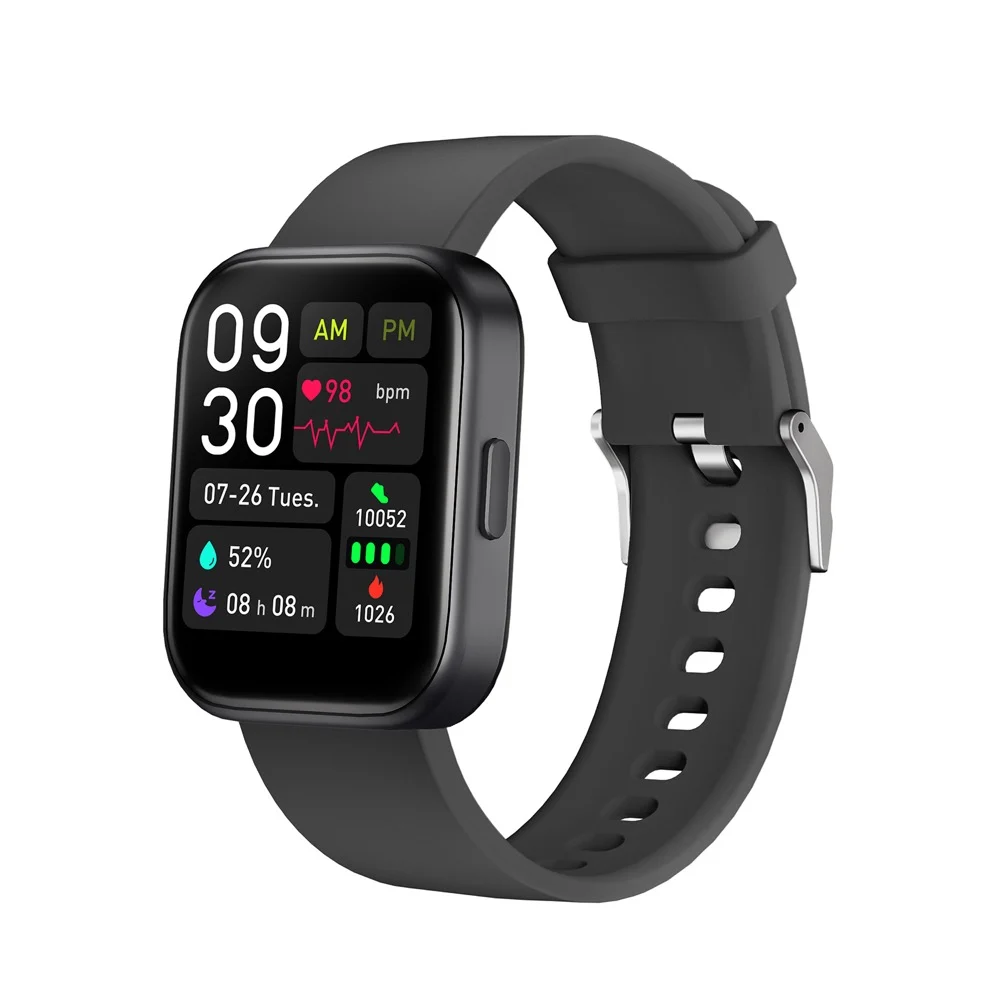
Movement tracking without the false precision
The Tribe Watch reads your heart rate and daily activity and shows you what it can actually see — no invented targets, no subscription, and never sold. $119.99 once, with a one-year warranty and no subscription on anything.
- Never sold, and no ad or analytics trackers in the app
- Locked to your account, saved under a random ID
- Erase everything with one tap, whenever you want
- No subscription for any tracking feature
Private by design. Yours by default.