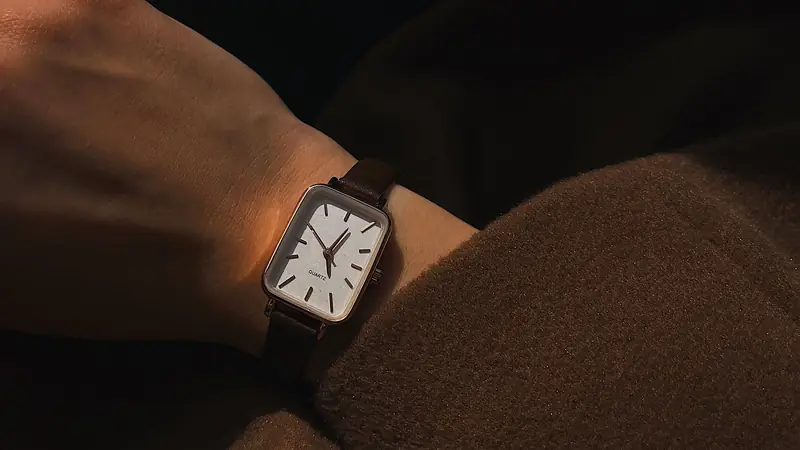
How Much Radiation Does a Smartwatch Emit? We Measured Ours
Every company selling you EMF protection has a story. None of them publish a number. Ours is 0.91 milliwatts, it comes from our FCC filing, and here is how to look up any watch you are considering.

Search for smartwatch radiation — or EMF, if that is the word you use — and you will find pages selling shielding cases, protective stickers and pendants, most of them written to make you anxious enough to buy one. What you will struggle to find is a number.
That is strange, because the numbers are public. Every device sold in the United States with a radio in it has an FCC ID, and behind that ID sits a lab report measuring exactly how much it transmits. Nobody publishes theirs. So here is ours, here is a competitor’s for comparison, and here is how to pull up any watch you are considering.
One thing worth settling first, because it decides how much the rest matters. The radiation a smartwatch emits is radio waves — the non-ionising kind, the same family as Bluetooth headphones, Wi-Fi and baby monitors. It is not the ionising radiation of X-rays or radioactive material, which carries enough energy per photon to break chemical bonds. Different physics, different question. What follows is about how much radio energy your watch puts out, and how to find out for yourself.
The short answer
The Tribe Watch transmits at a maximum of 0.91 milliwatts. The FCC limit for the rule it is certified under is 1,000 milliwatts. So it uses 0.09% of what it is legally allowed — a margin of about 30 dB, or roughly one eleven-hundredth of the cap.
| Measurement | Value |
|---|---|
| Maximum conducted output power | 0.91 mW (−0.43 dBm) |
| FCC limit, 47 CFR Part 15.247 | 1,000 mW (30 dBm) |
| Proportion of the limit used | 0.09% |
| Frequency | 2402–2480 MHz (Bluetooth Low Energy) |
| Antenna gain | 0.08 dBi — effectively none, so radiated power is also about 0.92 mW |
| Radios in the device | One. No Wi-Fi, no cellular, no ultra-wideband |
FCC ID 2ASAU-S90, test report HK2107192437-E, section 5.4.5. Shenzhen HUAK Testing Technology Co., tested July–August 2021. The filing covers the Tribe Watch’s model, GTS4, among a family it declares electrically identical.
What that number actually measures
Conducted output power is what the radio chip produces before it reaches the antenna, measured in milliwatts or in dBm. It is the figure the FCC requires and the one you can compare between devices, provided both are measured the same way.
dBm is a logarithmic scale, which trips people up. Every 10 dB is a factor of ten. So 0 dBm is 1 milliwatt, 10 dBm is 10 milliwatts, and 20 dBm is 100 milliwatts. Our −0.43 dBm sits just below one milliwatt.
It is also a worst case rather than a typical one. FCC testing runs the device at a duty cycle of 98% or higher — transmitting almost without pause. A Bluetooth tracker on a wrist sends short bursts and stays silent between them, so the figure on the certificate is a ceiling the watch does not sustain in ordinary use. The same is true of every device in this article, which is what makes comparing certificates fair.
Worth being clear about what this is not: it is not a SAR figure. SAR measures how much energy your tissue absorbs, in watts per kilogram, and it is a different test. Our filing does not contain one, so we are not going to quote one — not even an estimate. If you see a wearable brand quoting SAR, ask which report it came from.
Tribe vs Fitbit vs Apple Watch
Here is the comparison most people actually want. It lines up the strongest transmitter in each device — because that, not the average of its radios, is what sets the upper bound on what the thing on your wrist can put out.
| Device | Strongest radio | Maximum output | Tribe is lower by |
|---|---|---|---|
| Tribe Watch | Bluetooth LE | 0.91 mW | — |
| Google/Fitbit smartwatch | Bluetooth LE | 10.3 mW | 91% (11× less) |
| Apple Watch Series 10, cellular | LTE | 200 mW | 99.6% (221× less) |
Tribe and Fitbit figures are measured conducted output from their FCC filings (2ASAU-S90 §5.4.5; XRA-FB521 Form 731, applicant Google LLC, granted 12 August 2022). The Apple figure is the 3GPP ceiling for the LTE power class ordinary consumer devices use — see the caveat below.
Read the last row carefully, because the two numbers in it are not the same kind of number. Fitbit’s 10.3 mW is measured — it comes off their own FCC form, on the same rule part and in the same frequency band as ours, with the form stating "output power listed is conducted" exactly as ours does. That is a genuine like-for-like, and the 11× gap is real.
Apple’s 200 mW is a class ceiling, not a measurement. It is the maximum an LTE radio of that power class is permitted to reach, and cellular radios throttle down sharply when signal is good, so an Apple Watch in a city is usually transmitting far below it. We have not yet pulled Apple’s own filing for the measured figure. When we do, this row gets updated.
What is not in doubt is that the LTE radio exists and ours does not. The 221× is a comparison of ceilings on radios of different kinds — accurate, and worth exactly as much as that description suggests.
The number that matters more: how many radios
Output power per radio is the figure everyone reaches for. It is not the important one. What determines how much a watch transmits over a day is how many transmitters it contains and how often each one is talking.
Here the gap stops being a matter of decibels and becomes a matter of hardware.
| Device | Radios |
|---|---|
| Tribe Watch | 1 — Bluetooth Low Energy |
| Apple Watch Series 10 (cellular) | 5 — Bluetooth 5.3, Wi-Fi, LTE + UMTS, NFC, ultra-wideband |
| Google/Fitbit smartwatch (XRA-FB521) | More than one — its FCC form declares it a composite device requiring additional authorisation |
Apple Watch radios from Apple’s published technical specifications, checked 16 August 2026. Fitbit composite-device status from its own FCC Form 731.
A cellular watch carries an LTE modem, and LTE user equipment in the ordinary power class is specified to transmit at up to 23 dBm — 200 milliwatts. That is a ceiling rather than a constant; cellular radios throttle down hard when signal is good. But it is a ceiling roughly 220 times ours, on a radio we do not fit.
You cannot switch off a radio that was never installed.
That is the whole argument, and it is the same one we make about where your health data gets processed. A setting can be changed, a default can be reset by an update, a policy can be rewritten by whoever owns the company next. Absent hardware stays absent.
To be clear about the spec: the Tribe Watch has no cellular radio, so it works alongside your phone rather than instead of it. For almost everyone that is how a tracker gets used anyway — the phone is already in your pocket. What a cellular watch adds is a second phone radio on your wrist, plus a monthly line on your carrier plan to keep it running.
How to check any watch’s radiation yourself
Five minutes, free, and it works for every device in your house. This is the part of the article we would most like you to use on us.
- 1Find the FCC ID. It is printed on the caseback, in the manual, or in the device settings — on an Apple Watch, Settings › General › Regulatory. It looks like `2ASAU-S90`: a grantee code, then a product code.
- 2Go to the FCC Equipment Authorization Search at `fcc.gov/oet/ea/fccid`. Put the first three or five characters in Grantee Code and the rest in Product Code.
- 3Open the grant. In the results, click through to the grant or the Form 731. Ignore the test reports at first — the grant is one page and has what you need.
- 4Read the Equipment Specifications table. Each line is one radio: lower frequency, upper frequency, and power output in watts. Multiply by 1,000 for milliwatts.
- 5Count the lines. This is the part most people skip and it tells you the most. One line means one radio. Several lines, or a “composite device” flag, means more transmitters than the headline figure covers.
One honest caveat about the exercise: manufacturers can request confidentiality for parts of a filing, so some exhibits are withheld. The grant itself — frequencies and output power — is public in every case we have looked at, including ours.
What we are not going to tell you
We are not going to tell you that EMF from a wearable is harming you, because we do not know that and neither does anyone selling you a shielding sticker.
The radio in a smartwatch emits non-ionising radiation — it does not carry enough energy per photon to break chemical bonds, which is the mechanism that makes X-rays and ultraviolet light a known hazard. International exposure guidelines are built around tissue heating, and the power levels in this article are far below the point where measurable heating occurs. Harm below those limits is not established.
What we will say is this: wanting less of something is a legitimate preference and does not require proof of harm. People choose lower-alcohol drinks, quieter appliances and fewer ingredients without being asked to produce a study first. If you would rather have one small radio on your wrist than five, that is a reasonable thing to want, and you are entitled to the numbers that let you choose. Most of this industry would rather sell you the anxiety and the antidote at once.
How we handle it
The Tribe Watch has one radio because it only ever needs to do one thing: hand your readings to your phone over a short-range link. There is no cellular modem because it is not a phone. And there is no Wi-Fi because it talks only to your phone — we re-flashed it so it never connects to the original manufacturer’s app or servers, which leaves one short-range Bluetooth radio as all it needs.
That is the same instinct producing both results. Fewer radios is what you get when the watch only ever talks to your phone — and because there is no advertising business, your readings are stored under a random ID rather than your name and never sold, with no subscription holding your own history hostage.
Sensors are where every brand on the market is level — no optical reader sees through skin better than another, and any company implying otherwise is selling you something. The difference is what the device does with what it measures, and how loudly it has to broadcast to do it. That gap is not level at all, and unlike sensor marketing it is measurable: one radio at 0.91 mW against five.
Radio count is one measure. The wider comparison covers business model, data handling and deletion across every major brand.
So: 0.91 milliwatts, 0.09% of the limit, one radio, and a report number you can pull up yourself. If a company will not give you the equivalent for the watch you are looking at, that silence is information too.
Frequently asked questions
- How much EMF does a smartwatch emit?
- It depends on the watch and on how many radios it contains. The Tribe Watch transmits at a maximum of 0.91 milliwatts on Bluetooth — 0.09% of the 1,000 mW the FCC permits under Part 15.247 — from its FCC filing, ID 2ASAU-S90. A Google/Fitbit smartwatch measured on the same rule part reports 10.3 mW, about eleven times higher. A cellular smartwatch also carries an LTE modem specified to reach 200 mW.
- What is the lowest EMF smartwatch?
- Rather than trust anyone’s claim, look it up. Every device sold in the US has an FCC ID, and its Grant of Equipment Authorization lists each radio with its output power in watts. Count the lines as well as reading the watts — a watch with one Bluetooth radio transmits far less over a day than one carrying Bluetooth, Wi-Fi, cellular, NFC and ultra-wideband, whatever the per-radio figures say.
- Do smartwatches emit radiation?
- Yes — non-ionising radio-frequency energy, the same kind used by Bluetooth headphones, Wi-Fi routers and baby monitors. It does not carry enough energy per photon to break chemical bonds, which is what makes X-rays and UV a known hazard. Exposure guidelines are built around tissue heating, and consumer wearables operate far below the levels where measurable heating occurs.
- How do I check my smartwatch’s FCC test report?
- Find the FCC ID on the caseback, in the manual, or in device settings (on an Apple Watch: Settings › General › Regulatory). Go to fcc.gov/oet/ea/fccid, enter the first three or five characters as the Grantee Code and the rest as the Product Code, then open the grant. The Equipment Specifications table lists every radio with its frequency range and output power in watts.
- Does airplane mode reduce a smartwatch’s emissions?
- Yes, while it is switched on — the radios stop transmitting, though most watches keep recording and sync later. The limitation is that it is a setting, so it can be turned back on, changed by a software update, or forgotten. A watch that has no cellular or Wi-Fi hardware in the first place cannot transmit on them regardless of any setting.
- Is a lower-power smartwatch safer?
- We are not making that claim, and you should be wary of any wearable company that does. Harm from non-ionising radiation below international exposure limits is not established, and no consumer wearable is in a position to settle that question. What we can do is publish the measurement and the report number so you can compare devices and decide for yourself.
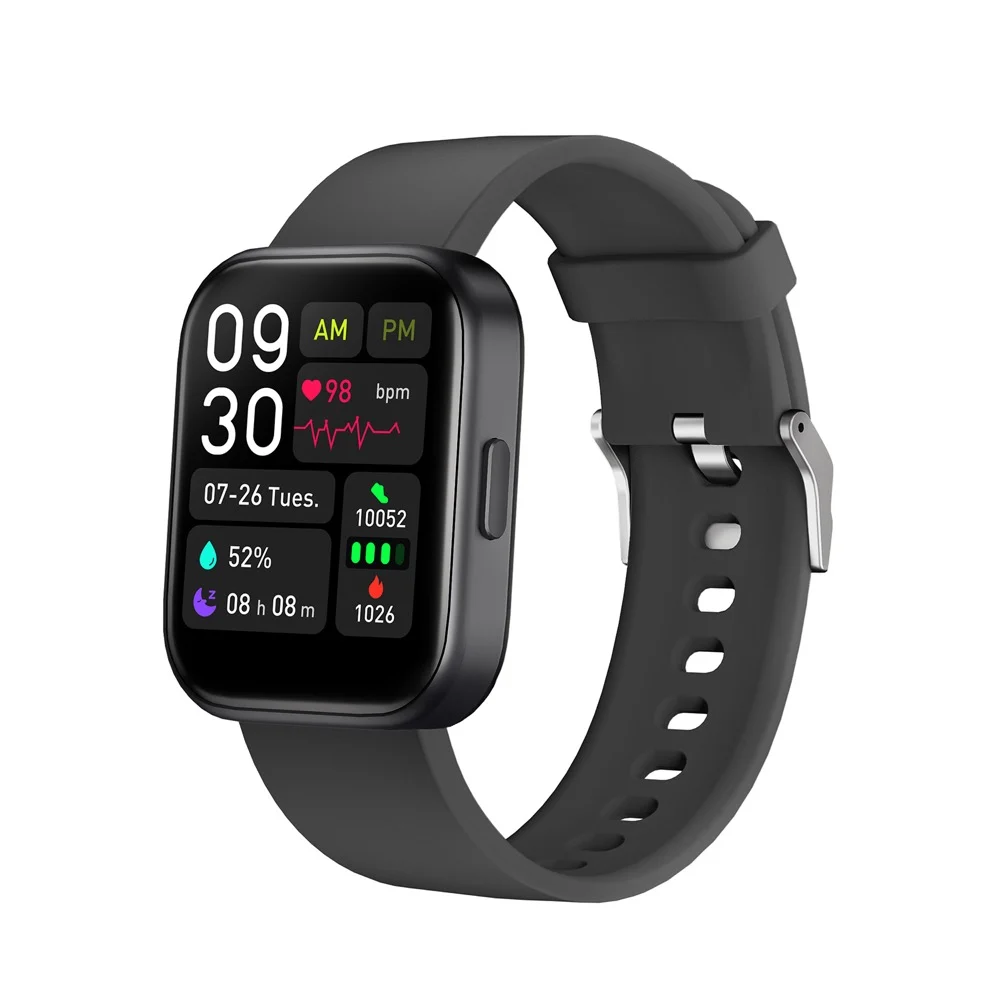
One radio. 0.91 milliwatts. Published.
The Tribe Watch has a single Bluetooth Low Energy radio and no cellular modem, no Wi-Fi and no ultra-wideband. Our FCC ID is 2ASAU-S90 — look it up rather than taking our word for it. $119.99 once, with a one-year warranty.
- Never sold, and no ad or analytics trackers in the app
- Locked to your account, saved under a random ID
- Erase everything with one tap, whenever you want
- No subscription for any tracking feature
Private by design. Yours by default.