Smartwatches Without a Subscription: What’s Actually Free and What’s Paywalled
The sticker price is the smallest number in the transaction. Here’s which wearables genuinely work without a subscription, what gets paywalled, and the five-year maths nobody shows you.

Wearables have quietly followed the same path as printers and razors. The hardware is the introduction; the recurring fee is the business. Sometimes that’s a fair exchange for genuinely useful analysis. Sometimes you’re renting access to numbers your own wrist generated.
This is a breakdown of which is which — and what the real cost looks like once you run it out five years.
The three models
Every wearable on the market fits into one of three categories, and the category matters far more than the monthly price.
| Model | What you get | What happens if you stop paying |
|---|---|---|
| No subscription | You buy the device; every feature it shipped with is yours. | Nothing. There is nothing to stop. |
| Optional subscription | Full core tracking free; extra analysis, coaching or programmes cost extra. | You keep the device and your core data. You lose the add-ons. |
| Subscription required | Hardware is bundled with, or dependent on, an active membership. | The device loses most or all of its usefulness, and your history may become unviewable. |
That third column is the entire decision. The right question isn’t “what do I get if I pay?” — it’s “what do I lose if I stop?” A device that keeps working when you cancel is a product you own. One that doesn’t is a service you were renting, with a piece of hardware attached.
Which wearables need a subscription?
Broadly, as of 2026:
| Brand | Model | Notes |
|---|---|---|
| Whoop | Subscription required | The hardware is free and the membership is the product. As of August 2026 Whoop’s checkout itemises the WHOOP 5.0 device, charger, band and warranty at $0, with the annual membership as the only charge. The band has no screen of its own. |
| Oura | Effectively required | From $399 for the ring, then $5.99/mo or $69.99/yr. Oura says the ring still works without a membership but that "the insights, personal health data, and benefits you receive will be much more limited". Verified Aug 2026. |
| Fitbit | Optional | Core tracking is free. Deeper analysis, guided programmes and longer history sit behind Fitbit Premium. |
| Garmin | Optional | Core tracking and Garmin Connect are free. A premium tier was added in recent years for additional insights and coaching. |
| Apple Watch | None for health | All health and fitness tracking works without a subscription. Fitness+ (workout classes) is a separate optional product. |
| Samsung Galaxy Watch | None for core tracking | Samsung Health tracking is free. Some newer coaching features have moved toward paid tiers. |
| Withings | Optional | Core metrics free; Health+ adds programmes and deeper analysis. |
| Tribe Watch | None | Every tracking feature works with no ongoing fee. An optional insights membership adds weekly written reflections and can be cancelled in one tap without losing your history. |
Pricing and tiers change often, and several brands have added paid tiers to previously free apps. Confirm current terms with the manufacturer before buying.
The five-year maths
Wearables get replaced roughly every three to five years, so five years is a fair horizon. Here is what the same nominal $250 device costs under each model — using illustrative monthly figures in the range the market currently charges.
| Scenario | Hardware | Subscription over 5 years | True cost |
|---|---|---|---|
| No subscription | $250 | $0 | $250 |
| Optional tier at ~$6/month, taken | $250 | ~$360 | ~$610 |
| Optional tier at ~$10/month, taken | $250 | ~$600 | ~$850 |
| Membership-required — Whoop One, $199/yr | Free with membership | $995 | $995 |
| Membership-required — Whoop Life, $359/yr | Free with membership | $1,795 | $1,795 |
| Ring + membership — Oura, $69.99/yr | $399 | $350 | $749 |
Hardware and optional-tier figures are illustrative for comparison. The Whoop rows are real: tiers verified from whoop.com on 12 August 2026 at $199, $239 and $359 per year. Pricing changes — check before buying.
The gap between the top and bottom rows is roughly the price of three more watches. That’s not an argument that subscriptions are a scam — a genuinely good coaching product can be worth $10 a month. It’s an argument for making the comparison deliberately, at the point of purchase, instead of discovering it in year three.
A $6 monthly fee reads as small and totals $360 over the life of the device. Neither number is wrong; only one of them is the price.
What usually sits behind the paywall
Across brands, the paywalled features fall into predictable groups. Sorted roughly from most to least defensible:
- Coaching and guided programmes. Genuinely ongoing work — content production, updates, sometimes human input. Reasonable to charge for.
- Advanced analysis and readiness scoring. Server-side computation with real costs. Reasonable, though it’s worth asking why it can’t run on the device.
- Long-term trends and history depth. Free tiers commonly show the last 7–30 days; the paid tier restores the rest. Charging for access to your own past readings is the point where many people balk.
- Data export. Occasionally restricted to paid tiers. This is the one to treat as a red flag — it turns your own history into a retention lever.
Why free tiers are not always the cheaper deal
There’s a catch worth naming: a wearable with no subscription and no hardware margin has to earn somewhere. With very cheap trackers, the companion app is often the actual product, and the business model may involve data. As covered in do fitness trackers sell your data, that rarely means a literal sale — but it can mean sharing you didn’t expect.
So the useful test combines both questions:
- 1Is there a subscription, and what breaks without it?
- 2If there isn’t one, how does the company make money instead?
Healthy answers exist for both. A hardware company selling a device at an honest margin, with an optional membership you can cancel without penalty, has a business model that doesn’t require anything from you except the purchase. That’s the arrangement we chose for the Tribe Watch: every tracking feature works with no ongoing fee, the optional insights membership can be cancelled in one tap, and your history stays yours either way. We don’t run an advertising business, so there’s no third revenue stream hiding behind the other two.
How to buy without regret
- 1Decide which of the three models you’re willing to accept before you shortlist devices.
- 2For any device with a subscription, find out precisely what stops working when you cancel — not what you gain when you pay.
- 3Confirm you can export your full history on the free tier.
- 4Multiply the monthly fee by 60. Compare that number, not the sticker price.
- 5Check how the company earns if there’s no subscription at all, using the five privacy questions.
Do that and the choice usually makes itself. Most people, once they’ve seen the five-year figure written down, discover they wanted a device they own rather than a service they rent — and that the features they’d actually use were in the free tier all along.
Frequently asked questions
- Which smartwatches work without a subscription?
- Apple Watch, Garmin, Samsung Galaxy Watch, Withings and Tribe Watch all provide core health and fitness tracking with no ongoing fee, with any subscription strictly optional. Whoop requires an active membership, and Oura places most of its insights behind one.
- Do you need a subscription for a fitness tracker?
- Not for most brands. Core tracking — heart rate, steps, sleep, activity — is typically free, with subscriptions covering coaching, advanced analysis, and longer history. The exceptions are membership-based products such as Whoop, where the hardware depends on an active subscription.
- What happens to my data if I cancel my fitness tracker subscription?
- It varies, and it is the most important thing to check before buying. Some brands keep your data intact and simply hide premium analysis. Others restrict how much history you can view, and a few limit data export to paid tiers. Confirm you can export your complete history on the free tier before you purchase.
- How much do fitness tracker subscriptions cost?
- Typically around $6 to $10 per month for optional premium tiers, and roughly $200 or more per year for membership-required products. Over a five-year device lifetime that is roughly $360 to $600 for an optional tier and around $1,000 for a membership model — often more than the hardware itself.
- Is a no-subscription fitness tracker better?
- Usually cheaper, and simpler to own, but check how the company earns instead. A hardware company selling devices at an honest margin has a straightforward model. A very cheap tracker with no subscription and no hardware margin is earning somewhere, and the companion app may be the real product.
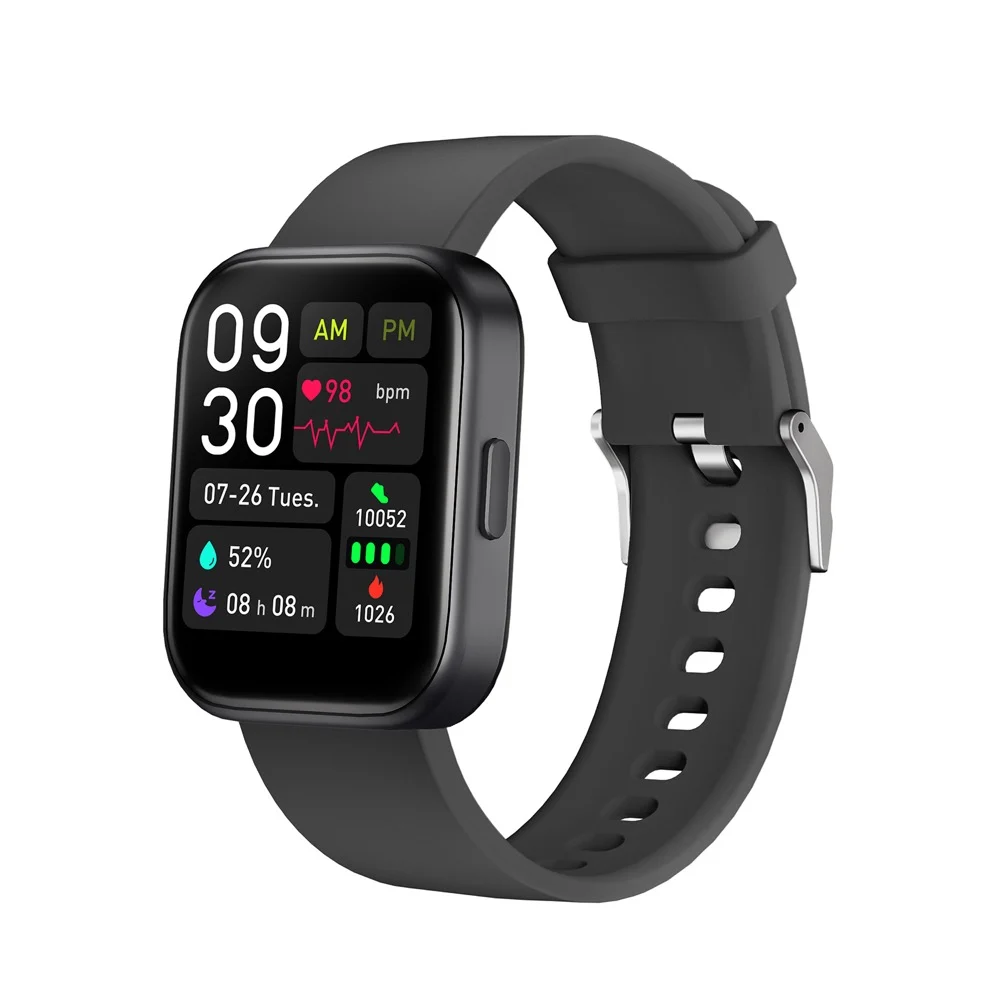
No subscription. No paywalled history. No catch.
Every tracking feature on the Tribe Watch works with no ongoing fee. Buy it once, keep your data, and cancel the optional insights membership any time without losing a thing. $119.99 once — against $995–$1,795 over five years for a membership band.
- Never sold, and no ad or analytics trackers in the app
- Locked to your account, saved under a random ID
- Erase everything with one tap, whenever you want
- No subscription for any tracking feature
Private by design. Yours by default.