What Is a Normal Sleeping Heart Rate? Ranges, Patterns and What Your Watch Means
Your heart slows by a fifth or more once you fall asleep — and “sleeping heart rate” means three different things depending on which watch you own. Here’s the range, the pattern, and what your number is really measuring.

You looked at last night’s chart and found a number lower than anything you see during the day. That is the system working. Sleep is the one time your body reliably takes its foot off the accelerator, and your heart rate is the clearest evidence of it.
Here is what the normal ranges are, what the shape of the night should look like, and — the part most guides skip — what your particular watch is actually reporting when it says "sleeping heart rate".
The short answer
For most healthy adults, heart rate while asleep falls to roughly 40–60 beats per minute. A typical waking resting rate sits between 60 and 100 bpm, and sleep usually pulls it down by around 20–30%.
If you are fit, expect lower. Trained endurance athletes often sleep in the 40s or high 30s, and that is a sign of a strong, efficient heart rather than a problem.
Normal sleeping heart rate by age
Adult sleeping heart rate changes less with age than people expect. These are approximate ranges:
| Group | Typical range while asleep | Notes |
|---|---|---|
| Adults 18–39 | 40–60 bpm | The broad middle. Fitness shifts this more than age does. |
| Adults 40–59 | 42–62 bpm | Little change from the previous band for most people. |
| Adults 60+ | 45–70 bpm | Tends to drift slightly upward, and medications often matter more than age. |
| Trained endurance athletes | 35–50 bpm | Low is expected. Consistently under 40 with no symptoms is common in this group. |
Approximate ranges for healthy adults, for orientation only. Children’s heart rates are considerably higher and follow different norms — that is a question for a paediatrician, not a wearable.
Notice how little the adult bands move. Fitness, medication, alcohol and illness all shift your sleeping heart rate more than a decade of ageing does — which is why your own baseline is far more informative than any table.
Your heart rate is not flat overnight
People often expect a straight line and worry when they see peaks. A normal night has a shape:
- Falling asleep — the rate drops fairly quickly as the parasympathetic branch of your nervous system takes over.
- Deep sleep — the lowest point of the night. This is where the body does its repair work, and it is usually concentrated in the first half of the night.
- REM sleep — heart rate becomes variable and can climb close to daytime levels. Vivid dreaming is metabolically busy, and brief spikes here are ordinary.
- Toward morning — a gradual rise as your body prepares to wake, often before your alarm.
So a chart with a low, steady trough early and a spikier second half is not a bad night. It is a fairly textbook one. The same nervous-system swing drives your heart rate variability, which is why the two numbers tend to move together.
What your watch is actually reporting
This is the part that explains most confusion, and almost nobody covers it.
"Sleeping heart rate" is not a standard term. Depending on which device you own, the figure on your screen may be:
- 1The average across the whole night — including the REM stretches where your rate climbs. This produces the highest number of the three.
- 2The lowest value recorded — often labelled "lowest resting heart rate". This produces the lowest number, and it is the one most often quoted in forums.
- 3The average during deep sleep only — somewhere in between, and arguably the most physiologically meaningful.
There is a measurement caveat on top of that. A wrist wearable reads your pulse optically, by shining light into your skin and detecting blood flow. It is reliable at rest, which is exactly why overnight readings are the most trustworthy your watch produces — but a loose strap still degrades the data, and a band that slides down your wrist in the night is a genuinely common cause of odd readings.
Why is my heart rate high while sleeping?
An overnight rate that is higher than your usual is one of the most common things people notice, and the causes are almost always ordinary:
| Cause | Typical effect | How long |
|---|---|---|
| Alcohol | Often the largest single effect — commonly 5–10 bpm higher | One to two nights |
| A late or heavy meal | Several bpm higher through the first half of the night | One night |
| A warm room | Higher throughout; your body is working to cool itself | While the room is warm |
| Illness or fever | Noticeably higher, often before you feel unwell | Through the illness |
| Hard training that day | Elevated as your body recovers | One to two nights |
| Stress or anxiety | Higher, and often paired with more waking | As long as the stressor |
| Dehydration | Higher; the heart compensates for lower blood volume | Until rehydrated |
| Some medications | Varies considerably | Ongoing — ask a pharmacist or doctor |
The same list, in the same order, explains a low HRV reading — because they are two views of the same nervous system. If both moved on the same night, you are almost certainly looking at one cause, not two problems.
When it is worth asking a doctor
A single unusual night is noise. These patterns are worth a conversation with a clinician:
- A sustained rise over several weeks with no obvious explanation, particularly alongside fatigue or breathlessness.
- A consistently low rate with symptoms — dizziness, fainting, unusual tiredness. Low on its own is often just fitness; low with symptoms is not.
- Any episode with chest pain, palpitations, fainting or severe breathlessness, which warrants prompt medical attention regardless of what your watch says.
How to lower it
The levers are unremarkable, and they are the same ones that improve everything else your watch measures:
- 1Move the last drink earlier, or skip it. Nothing else on this list changes the number as reliably.
- 2Keep the bedroom cool — a warm room raises overnight heart rate more than most people expect.
- 3Finish eating two to three hours before bed.
- 4Build an aerobic base. Regular easy-effort cardio lowers resting and sleeping heart rate over months. This is the only permanent fix on the list.
- 5Keep a consistent bedtime, which stabilises the whole overnight pattern.
- 6Wear the band snugly, just above the wrist bone — a loose strap produces bad optical data, and bad data reads as an odd number.
How we handle it
Your overnight heart data is a fairly complete record of how your life is going — it moves with your drinking, your stress, your illnesses and your sleep, updated nightly. So the Tribe Watch stores what it syncs under a random ID rather than your name, locked to your account and never sold, with no trackers in the app.
We also show you the shape of the night rather than a single grade, because the pattern is where the information is. Every tracking feature works with no subscription, and one tap erases the lot.
Your overnight heart data is the most revealing record you generate. Which brands keep it, and which do not.
So: 40 to 60 is the usual answer, lower if you are fit, and a night that dips deep then gets busier before dawn is exactly what it should look like. Everything more precise than that depends on which number your watch decided to show you.
Frequently asked questions
- What is a normal sleeping heart rate?
- For most healthy adults, roughly 40–60 beats per minute — about 20–30% below a typical waking resting rate of 60–100 bpm. Trained endurance athletes often sleep in the 40s or high 30s, which is normal for them. Fitness affects this figure more than age does.
- What is a normal sleeping heart rate by age?
- Approximate adult ranges: 40–60 bpm at 18–39, 42–62 bpm at 40–59, and 45–70 bpm at 60 and over. The bands move surprisingly little, because fitness, medication, alcohol and illness shift the number more than ageing does. Children have considerably higher rates and different norms — that is a question for a paediatrician.
- Why is my heart rate high while sleeping?
- The usual causes are alcohol, a late or heavy meal, a warm bedroom, illness, hard training that day, stress, dehydration, or medication. Alcohol is typically the largest single effect and commonly raises overnight heart rate by 5–10 bpm. All of these are short-lived, so one high night reflects yesterday rather than your health.
- Should my heart rate be flat all night?
- No. A normal night has a shape: it drops as you fall asleep, reaches its lowest point during deep sleep in the first half of the night, becomes variable and can climb during REM, then rises gradually toward waking. Brief spikes during REM are ordinary.
- Why does my watch show a different sleeping heart rate than my friend’s?
- Because "sleeping heart rate" is not a standard term. Depending on the device, it may be the average across the night, the lowest value recorded, or the average during deep sleep only. Those three definitions can differ by 10 bpm on the same person, which is also why switching brands can appear to change your numbers overnight.
- Is a low sleeping heart rate dangerous?
- Usually not — a low rate while asleep often reflects good cardiovascular fitness, and endurance athletes routinely go below 40. What matters is symptoms. A low rate with dizziness, fainting or unusual fatigue is worth discussing with a doctor; a low rate on its own, in someone who feels well, generally is not.
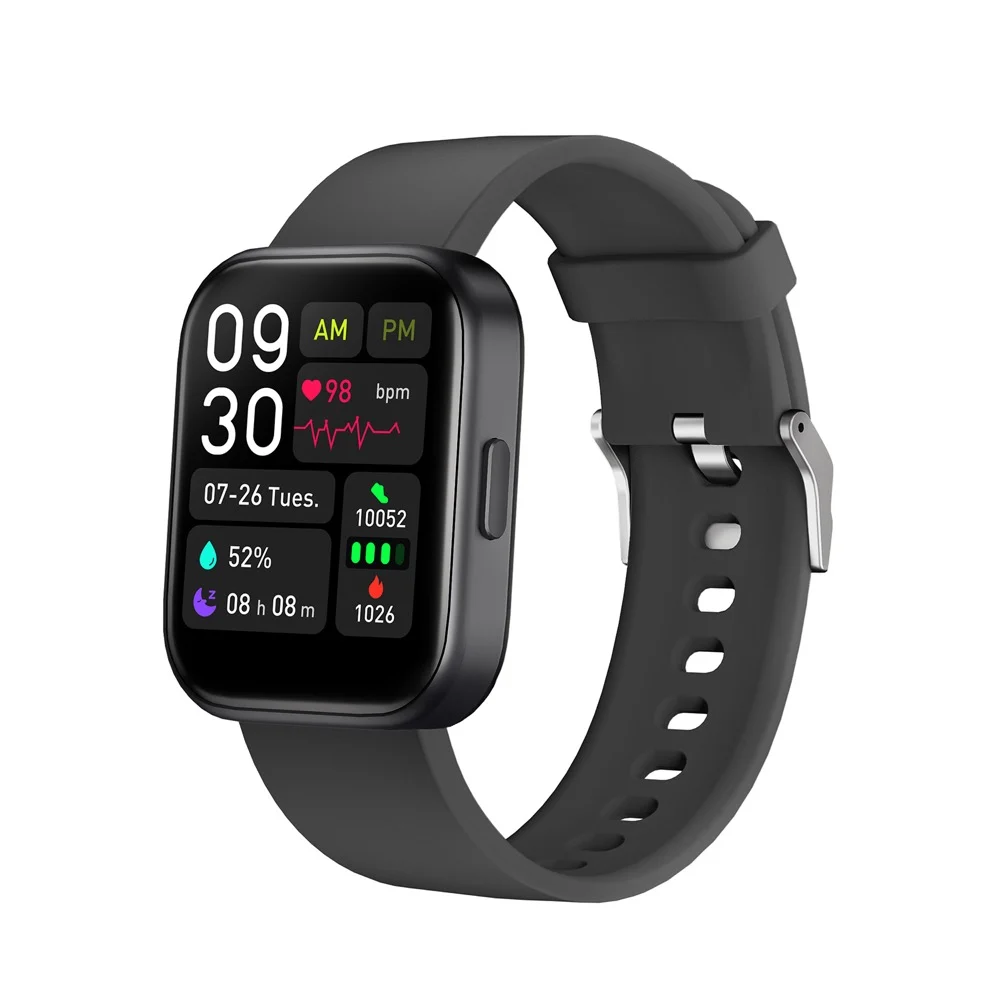
Overnight heart data, never sold and yours to delete
The Tribe Watch tracks your heart rate through the night, shows you the pattern in plain language, and never sells it to anyone. $119.99 once, no membership, and one tap erases it all.
- Never sold, and no ad or analytics trackers in the app
- Locked to your account, saved under a random ID
- Erase everything with one tap, whenever you want
- No subscription for any tracking feature
Private by design. Yours by default.