Does Oura Sell Your Data? What the Privacy Policy Actually Says
Oura’s policy says it does not sell your data, and there is no reason to doubt it. The interesting part is the list of people it says may receive your data anyway — and the clause describing what happens if the company changes hands.

You are searching this because you sleep in the thing. It knows your resting heart rate, your temperature, when you drank, when you were ill, and roughly when you go to bed with someone. That is a reasonable thing to want an answer about.
The answer is not the one-word version you were hoping for. We read the policy on 15 August 2026, and here is what it says — including the parts that do not make it into the marketing.
The short answer
No — Oura states that it does not sell your personal information. Take that at face value. There is no marketplace where your resting heart rate is auctioned under your name, and a company that did that would not survive the headline.
But "sell" is a narrow word, and in privacy law it is narrower still. It generally means an exchange of personal information for money or other valuable consideration. Handing your data to another organisation for free is not a sale. So the question worth asking is not whether Oura sells your data. It is who receives it.
Who Oura says may receive your information
Its policy sets out categories of recipient. Two are worth reading twice.
Neither of these is a scandal. Both are disclosed, which is more than some companies manage. But "we do not sell your data" and "your data goes to nobody" are very different sentences, and only one of them is being made.
For contrast, Whoop’s policy names its AI partner too — and then binds it to a zero-retention, zero-training contract and sends it only de-identified metrics. Oura’s policy does neither. The difference is instructive: the disclosure is the easy part.
The de-identified loophole
Oura, like nearly every wearable company, reserves the right to share aggregated or de-identified data without restriction. This sounds like the safe compromise. For most kinds of data it is.
Biometrics are not most kinds of data. Continuous heart rhythms and daily movement patterns behave like a fingerprint — researchers have repeatedly shown that individuals can be picked back out of "anonymous" datasets from a handful of timestamped data points. And once information leaves under a de-identified label, the promise you originally accepted no longer travels with it.
The clause almost nobody reads
Somewhere near the end of every wearable privacy policy is a sentence about what happens if the company is acquired, merged or sold. Oura has one. Your health history is among the assets that move.
This is the part that should shape how you think about all of it. A privacy policy is a statement of present intent by the people currently running a company. It can be amended. It transfers in a sale. It offers nothing at all against a legal demand for data the company is holding.
The clause to worry about is not the one that breaks the promise. It is the one that quietly changes who the promise was made to.
And you are paying for the privilege
The ring starts at $399. The membership is $5.99 a month or $69.99 a year on top. Over five years that is $748.95 — and Oura is explicit about what happens if you stop:
“If you choose not to begin or continue your Oura Membership, your Oura Ring and Oura App will still function, but the insights, personal health data, and benefits you receive will be much more limited.”
Read that again with the rest of this page in mind. Your body generates the data. Their servers hold it. And access to your own personal health data is described as a benefit of continued payment. Pricing checked on ouraring.com, 15 August 2026.
None of this is unusual — and that is the point
We are not telling you Oura is a bad actor. It discloses more than plenty of its competitors, its policy is more readable than most, and we have no evidence it has broken any part of it.
That is precisely what should worry you. Every clause on this page — the recipient list, the aggregation carve-out, the change-of-control sentence — is ordinary, legal and industry-standard. And every one of them traces back to the same thing: an identified record of your body, held inside a business built to share it.
An identified health record, held by a company whose model is to share it, is what creates the exposure. Once that record of your sleep, your heart and your temperature exists on infrastructure you do not control, it can be shared, aggregated, subpoenaed, breached or transferred — and no promise, however sincerely made today, can change what is possible tomorrow.
How the Tribe Watch answers the same question
We built the Tribe Watch to take those reasons off the table, and it means the questions above have short answers.
| The question | Tribe Watch |
|---|---|
| Who may receive your health data? | No one it is sold or brokered to. In-app insights and chat get only anonymized numbers — never your name, email or location. |
| Any LLM providers? | In-app chat receives anonymized numbers only — never your name, email or location. |
| Any employer access? | No corporate wellness programme, no employer relationship. |
| Aggregated or de-identified sharing? | Never sold or shared with brokers. Data is stored under a random ID, apart from your name. |
| What if the company is sold? | No advertising business or broker relationships to inherit — and you can delete everything first. |
| What does it cost to keep your data? | Nothing. $119.99 once, and every feature works forever. |
| How do you delete it? | One tap in the app, anytime — your account and all data. |
That is a mix of structure and commitment: some of it is built in — a random ID kept apart from your name, no ad or analytics SDKs in the app, access locked to your account so an anonymous request is refused — and some is a promise we make plainly: we don’t sell it, and you can delete it yourself anytime.
We also sell watches for a living. There is no advertising business anywhere in the company, no membership, and no tier above you. That single fact answers most privacy questions before they are asked — as covered in do fitness trackers sell your data. The same exercise applied to Fitbit produces a stranger answer, because Fitbit’s privacy policy is now hosted on Google’s website.
Oura is not unusual, which is the point. The same five questions applied to every major brand shows how alike the answers are.
So: no, Oura does not sell your data. It shares it, under terms you agreed to, with parties including AI vendors and — in some cases — your employer, and it will pass your history to whoever buys the company. All of it disclosed, all of it legal — and a different proposition from a company with no advertising business, no recipient list, and no broker on the other end.
Frequently asked questions
- Does Oura sell your data?
- Oura states that it does not sell your personal information, and there is no evidence to the contrary. Its privacy policy does describe parties who may receive your information, including service providers such as LLM providers and — in corporate wellness deployments — employers. Sharing and selling are different things legally, and only the second is being ruled out.
- Does Oura share data with AI companies?
- Oura’s privacy policy, read on 15 August 2026, lists “LLM providers” among the service providers who may receive information. What that covers in practice is not spelled out in detail, which is itself worth noting given the ring collects overnight heart rate, body temperature and sleep timing.
- Can my employer see my Oura data?
- In corporate wellness deployments, employers appear among the parties who may receive information. If your ring came through a workplace programme, check the specific terms of that programme rather than assuming the retail privacy policy applies unchanged.
- What happens to my Oura data if the company is sold?
- Oura’s policy, like almost every wearable policy, contains a change-of-control clause: in an acquisition or merger, your data is among the assets that transfer to the new owner. The privacy promise you accepted was made by the current management and can be amended by whoever comes next.
- How much does Oura cost over five years?
- The ring starts at $399 and the membership is $5.99 a month or $69.99 a year, so five years comes to about $748.95. Oura states that without a membership the ring and app still function, but “the insights, personal health data, and benefits you receive will be much more limited.” Pricing checked on ouraring.com, 15 August 2026.
- Is there a sleep tracker that does not sell your data?
- Yes. The Tribe Watch stores heart rate, sleep and daily activity in the cloud under a random ID kept apart from your name, never sells it to advertisers or data brokers, and has no trackers in the app. It costs $119.99 once with no subscription, and you can delete your account and all data anytime.
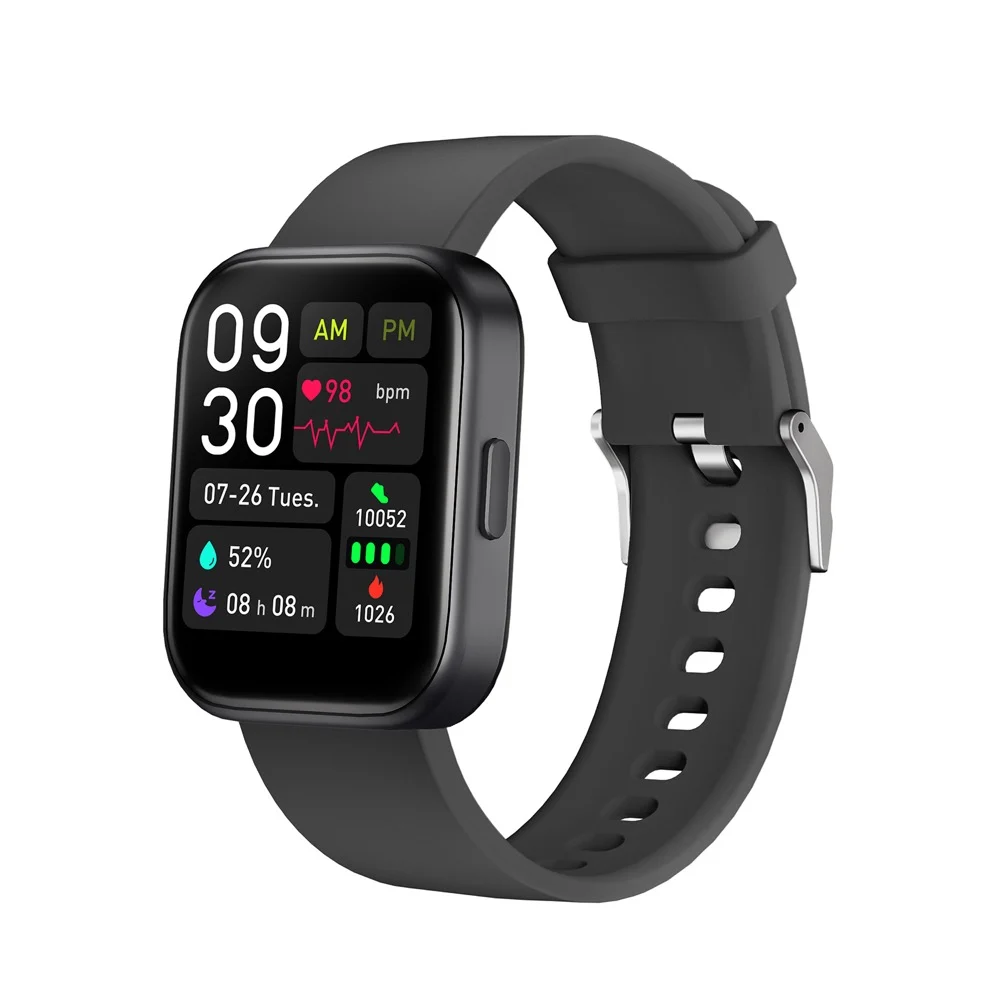
A short policy, because there is no ad business
The Tribe Watch stores your body’s readings under a random ID, kept apart from your name and locked to your account. Never sold, no data brokers, no trackers in the app — and you can delete everything yourself anytime. $119.99 once, no subscription.
- Never sold, and no ad or analytics trackers in the app
- Locked to your account, saved under a random ID
- Erase everything with one tap, whenever you want
- No subscription for any tracking feature
Private by design. Yours by default.