Does Whoop Sell Your Data? What Happens When You Delete Your Account
Whoop’s privacy policy is more carefully written than most of this industry’s. That is exactly why the clause about deletion is worth reading twice — because it survived a careful draft.

Whoop knows more about your body than any company you have ever paid. Its own collection list includes resting heart rate, heart rate variability, respiratory rate, skin temperature, blood oxygen, precise GPS — and, if you enter them, your medications, your diet, and female health tracking.
So the question deserves a real answer rather than a slogan. We read the full policy, dated 3 August 2026. Here is what it says, including the parts that reflect well on them.
The short answer
No — and Whoop is unusually direct about it. The policy states "We do not sell Personal Data", adds "We do not sell your consumer health data to third parties", and includes a California-required lookback: "For the 12-month period prior to the date of this Privacy Policy, WHOOP has not sold any Personal Data."
Three statements where most companies manage one. We have no reason to doubt any of them, and this page is not going to pretend otherwise.
The sentence to read twice
It appears in the section on deleting your account:
“We may need to retain certain Personal Data in our records, as well as aggregated data or de-identified data derived from or incorporating your Personal Data that does not identify you after you update or delete it.”
Read the end of it slowly. After you update or delete it. You can close your account, stop paying, send the strap back — and the data derived from three or five years of your sleep, your recovery and your nervous system does not go with you. It has been folded into something else, and that something else stays.
The policy also says de-identified wellness data is used "for research purposes to help us and our research partners". Those partners are not named.
If you train with a coach or a team, read this one
“…your account information and Personal Data may be shared with the managing entity subject to your consent, and you hereby consent to that managing entity allowing that information to be publicly shared.”
"You hereby consent." Not "you may choose to" — the consent is granted by the policy itself. If your strap is administered by a coach, a club, a team or an employer, you have already agreed that they may make your information public. The policy adds that the managing entity "will determine how the relevant information and content is shared." Not you.
Where else your data comes from
Most people assume the data flows one way — off your wrist, into the app. The policy lists the sources Whoop collects from, and two of them are worth noticing:
“Customers and partners, such as employers, insurance companies, coaches, teams, or other organizations that engage with our Services.”
Insurance companies. In a policy about a device that measures your heart, your sleep and your recovery. Whoop is not doing anything unusual — corporate and insurer wellness programmes are a large part of this market — but it is worth knowing the relationship exists before you decide how much to tell the app about your habits.
And one line most companies write the other way round
“We do make decisions based solely on automated processing involving personal data, including profiling, which produce legal effects or similarly significantly affects you.”
That is Whoop’s own GDPR disclosure. The overwhelming majority of privacy policies say do not. This one says do, and ties it to the AI coaching described elsewhere in the document. Whether that troubles you is your call — but it is a disclosure the company chose to make, and it deserves to be read rather than skipped.
What Whoop gets right — and why it matters here
We are not going to run the same argument against every company. On its AI partner, Whoop’s policy is stronger than its competitors’, and pretending otherwise would be dishonest:
- Its LLM partner is contractually bound to a "Zero-Retention/Zero Training Policy" — it may not store your data or train on it.
- "We will only share de-identified WHOOP metrics with our LLM partner."
- "We do not share your sensitive personal information with third parties for their own advertising or marketing purposes."
- There is a separate Consumer Health Data Privacy Notice, and a personalisation setting you can switch off.
That is a careful document, written by people who thought about it. Which is exactly why the deletion clause is worth taking seriously. It is not an oversight in a sloppy policy. It survived a careful draft, because it has to: once your body is a record on someone else’s servers, "delete" can only ever mean "delete the parts we can still separate from everything we built with them."
A good privacy policy tells you honestly what a company is keeping. It cannot make the company stop needing to keep it.
How the Tribe Watch answers the same questions
| The question | Tribe Watch |
|---|---|
| What is kept after you delete? | You can delete your account and all data anytime. |
| Who are the research partners? | Your data is never sold, and never shared with data brokers. In-app insights get only anonymized numbers. |
| Can a coach or team publish your data? | Shared only with tribes you choose to join. Leave a tribe and sharing stops. |
| Do insurers or employers feed in data? | No corporate wellness programme, no employer relationship. |
| Any automated decisions about you? | In-app insights and chat receive only anonymized numbers — never your name, email or location. |
| What does it cost to keep access? | Nothing. $119.99 once — every tracking feature, forever. |
Some of that is structure and some of it is a promise: how a tracker is built — a random ID kept apart from your name, no ad or analytics SDKs in the app, access locked to your account — sits alongside the commitments we state plainly: we don’t sell it, and you can delete everything yourself anytime.
And it costs once. Whoop runs $199–$359 a year — $995 to $1,795 across five years, at the end of which you own no hardware and, per the clause above, cannot fully retrieve what was built from your body. We set out that maths in full in Whoop alternatives without a subscription.
Whoop’s policy is better than most. How it compares against every other major brand is worth reading before you decide.
So: no, Whoop does not sell your data, and its policy is better than most in this industry. It also keeps what it derived from you after you leave, lets a coach publish your information under consent you already gave, counts insurers among its data sources, and makes automated decisions that significantly affect you. All disclosed. All legal — and a different set of tradeoffs from a company with no advertising business, no data brokers, and deletion you control.
Frequently asked questions
- Does Whoop sell your data?
- No. Whoop’s privacy policy states "We do not sell Personal Data" and separately "We do not sell your consumer health data to third parties", and includes a California 12-month lookback confirming it has not sold any Personal Data. Policy read 20 August 2026, last updated 3 August 2026.
- What happens to my Whoop data when I delete my account?
- The policy states Whoop may retain certain Personal Data, "as well as aggregated data or de-identified data derived from or incorporating your Personal Data that does not identify you after you update or delete it." So deletion removes your identified record, but data derived from your history is retained. De-identified wellness data is also used for research with unnamed research partners.
- Does Whoop share data with AI companies?
- Yes, but with unusually strong terms. WHOOP Coach uses a third-party LLM partner, and the policy states that partner is bound to a "Zero-Retention/Zero Training Policy" and receives only de-identified WHOOP metrics. On this specific point Whoop’s language is stronger than several of its competitors.
- Can my coach or team see my Whoop data?
- If your account is administered by a managing entity such as a coach, team or organisation, the policy states your data may be shared with them and that "you hereby consent to that managing entity allowing that information to be publicly shared." The managing entity determines how it is shared, not you.
- Does Whoop share data with employers or insurance companies?
- The policy lists "employers, insurance companies, coaches, teams, or other organizations" among the sources it collects data from, and says information may be shared with corporate wellness organisations subject to your consent — typically in aggregated form. If you received your strap through work or an insurer, check that programme’s specific terms.
- Is there a fitness tracker that does not keep anything after you delete?
- Yes. The Tribe Watch lets you delete your account and all data anytime. Its readings are stored under a random ID kept apart from your name, never sold to advertisers or data brokers, with no trackers in the app. It costs $119.99 once with no subscription.
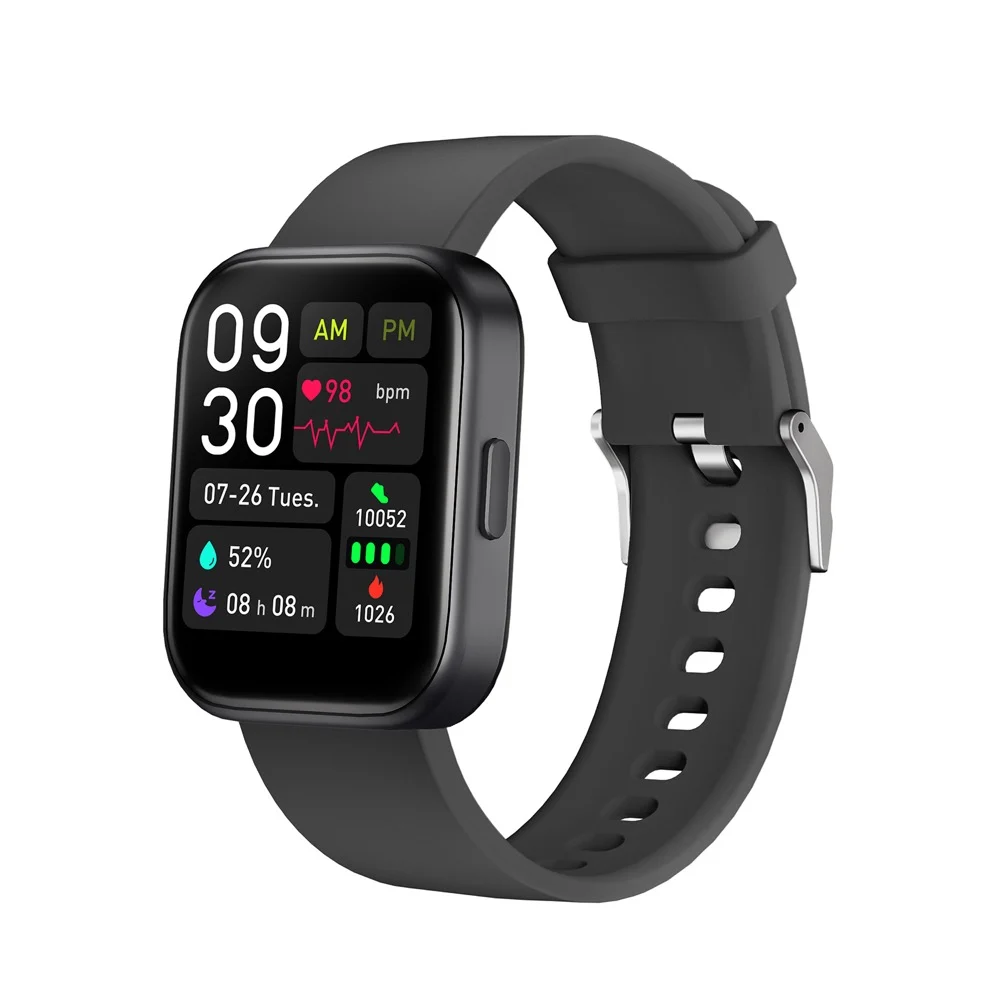
Delete means delete — and you do it yourself
The Tribe Watch stores your readings under a random ID, kept apart from your name and never sold. No data brokers, no advertising business, no trackers in the app — and you can delete your account and all data anytime. $119.99 once, no subscription.
- Never sold, and no ad or analytics trackers in the app
- Locked to your account, saved under a random ID
- Erase everything with one tap, whenever you want
- No subscription for any tracking feature
Private by design. Yours by default.